Bowie Lam prefers to influence lives on the ground after a stint with an NGO fighting for prostitutes’ rights
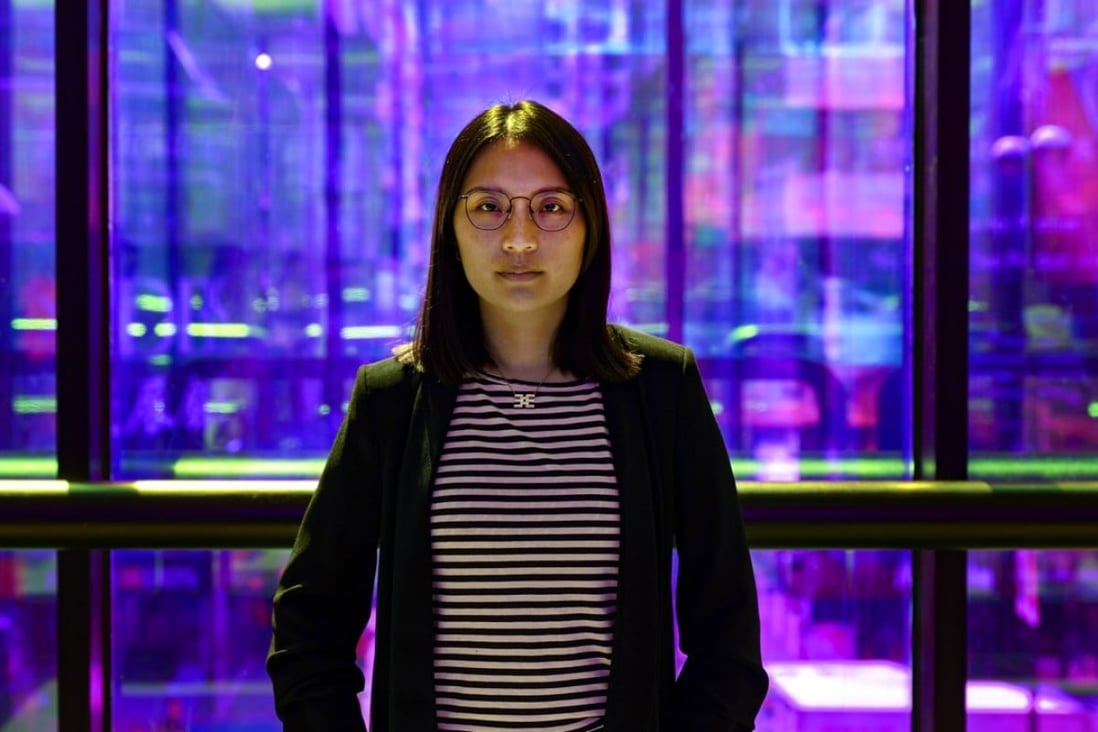
Bowie Lam, founder of charity Teen’s Key. Photo: Sam Tsang
A Hong Kong sociologist has made it her personal mission to shed light on the plight of a marginalised and often misunderstood group of women in the city – prostitutes.
“Some 80 per cent of girls we’ve spoken to want to leave [the sex trade],” says Bowie Lam, founder of charity Teen’s Key. “But they feel they don’t have a choice.”
The true numbers of those entering this illicit and highly dangerous business are hard to establish, Lam says. One of the major problems facing Teen’s Key is a lack of reliable data that could help illustrate the scale of sex work among young women.
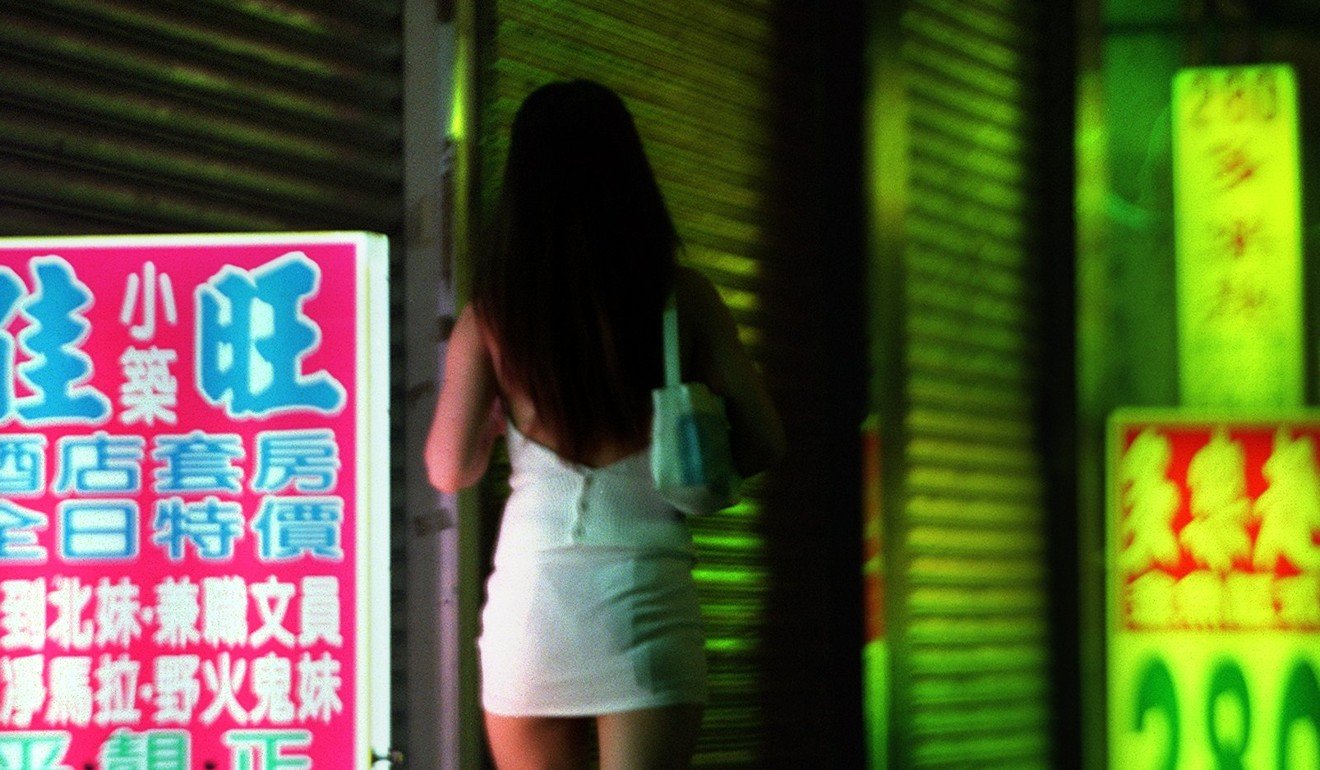
Many women in the city’s sex trade were forced into it or entered out of desperation. Photo: Edward Wong
Lam believes there are thousands of girls involved in sex work in Hong Kong, but the internet enables them to operate both anonymously and independently, so they can be hard to communicate with. “We do get some data from police,” she says, “but generally those come from raids on criminal gangs, so it’s not representative of the overall picture.”
While some sociologists take a more theoretical approach to their work, Lam, 31, is notably hands-on. After graduating with a degree in sociology from Lingnan University in 2010, she worked for Zi Teng, a local NGO dedicated to improving the rights of sex workers.
Much of her work with the group was focused on the abuse of sex workers at the hands of clients and the authorities, as well as keeping track of the trafficking of women in the trade and problems facing migrant sex workers.
Some 80 per cent of girls we’ve spoken to want to leave
– Bowie, Teen’s Key
Lam realised there was a need to dive deeper into specific issues faced by local women.
In 2011, Zi Teng offered to help her launch her brainchild, Teen’s Key. The name of Lam’s group symbolised what she hoped to achieved – “to give girls a way out of their situation”.
Last year, Zi Teng said it received more than 400 reports of abuse of sex workers at the hands of police and clients. Cases allegedly involving police included indecent assault and forced or coerced statements. The accusations centred on clients included 11 counts of grievous bodily harm, three cases of rape, and 20 cases of theft.
Lam also says the push factors behind those that were forced into the industry include financial desperation and blackmail, while others may be lured in with huge offers from clients. This is made easier by a lack of proper sex education and guidance in their formative years.
The taboo that Chinese culture places on sex contributes to this, she says. “There is no compulsory sex education in Hong Kong, so it’s a topic young people don’t feel they can talk about with an adult.”
In the absence of proper education, Lam says, many young people turn to the internet for information, especially in this age of social media.
“Men on social media are very good at coercing naive girls into doing what they want,” she says, adding that many cases usually go under the radar because of the anonymous nature of the internet.
Lam cites cases that illustrate how women become ensnared in the sex trade. In one example, the girl in question was orphaned at the age of 14, and was taken into a government-assigned hostel. Upon turning 18 she left the programme but was still unable to support herself financially and began borrowing money, racking up a debt of HK$300,000. Threatened by creditors, she turned to social media as an avenue to solicit cash for sex.
Lam says Teen’s Key helped the young woman file for bankruptcy, effectively discharging the debt.
Other factors that lead women into sex work, according to Lam, are a lack of education and societal pressures.
“Most of these girls don’t have a degree, and they believe if you don’t have a degree, you can’t get a good job.
“Yet, you need a lot of money to go to university. And Hong Kong university fees can cost more than HK$100,000 a year,” Lam says.
Social media services like Instagram, for their part, have tried to stamp out the sex trade on their platforms, but users are always one step ahead. “For example, Instagram banned the hashtag #ptgfhk [part-time girlfriend, Hong Kong], but girls quickly adapted, using hashtags with Chinese characters to bypass the ban,” Lam says.
Teen’s Key provides young women with counselling and employment advice, and helps them get back into school. To date, it has handled 3,000 cases with a team of just five paid staff – including Lam – and 20 volunteers.
“The current focus of Teen’s Key is to provide vocational training and counselling,” Lam says. This approach is centred on soft skills such as how to write a résumé, customer relations, and how to understand an employment contract.
“Many of the girls have never done any work outside the nightclub, and must learn the skills they’ll need for work in another environment,” Lam says.
Next on the agenda is to build a permanent headquarters, which could also function as a temporary shelter for women who want to leave the trade. The group currently functions out of a small office in Mong Kok.
While Hong Kong has other centres that cater to disadvantaged youth, they are not always suited to the needs of the young women. “Many hostels or halfway houses place restrictions on the young people staying there, such as taking away their phones. These girls will avoid such places altogether. We need them to feel that they still have independence.”
A major obstacle, Lam says, is high rents. “We have some very generous donors, but so far we haven’t had anyone who has been able to come forward to provide a location for the centre.”
This year Lam received a scholarship from the Hong Kong Jockey Club to study for her EMBA at the local campus of the University of Chicago Booth School of Business. It’s a full-time, intensive course, which Lam juggles with her work at Teen’s Key. She has little – if any – time for herself, but she doesn’t seem fazed.
“When I was growing up I loved to read and write stories and fantasies. But later I began to realise that real life is not like in fairy tales. My question is, with all of society’s resources, can we not fix these problems?”
When Sally* looked down at the two bars on her pregnancy test, she was devastated. Her period was a month late, but she never expected to be pregnant. Sally immediately sought help from Teen’s Key, an NGO supporting young women and their reproductive health. While a social worker talked her through the options, Sally’s mind went blank. All she knew was that she couldn’t have the child.
As an 18-year-old high school student, Sally was afraid that having a baby would disrupt her education and damage her relationships. At the same time, having an abortion would also interrupt her studies and anger her parents. Either way, she felt trapped.
She told herself that terminating the pregnancy was the hardest option, but also the most rational. Accompanied by the social worker, she visited the Family Planning Association of Hong Kong (FPAHK) for help. But due to a pre-existing physical condition, which Sally declined to share, FPAHK could not admit her for surgery and referred her to Princess Margaret Hospital.
She couldn’t have imagined how long the process would be. First, Sally had a thorough gynecological exam, followed by a series of follow-up appointments. If she failed to attend even one, she would have to wait a long time before she could reschedule. The teenager missed several days of school in the process, which affected her attendance and academic progress.
Two months later, at three months pregnant, Sally still hadn’t had an abortion due to the long waiting list. When she was finally cleared for surgery, doctors found that her fetus no longer had a heartbeat and instead organised a medical abortion.
During a surgical abortion – which is considered one of the safest and quickest methods – the patient is sedated. Once the anesthetic has taken effect the doctor inserts a tube into the uterus and, applying gentle pressure, removes the contents and lining of the uterus. In Sally’s case, doctors administered drugs orally to induce contractions and cause her to pass pregnancy tissue out of her body. After the abortion, Sally attended three more follow-up consultations so doctors could monitor her recovery.
The whole process – from discovering she was pregnant to the medical abortion – lasted almost 17 weeks, or four months. Throughout, Sally felt exhausted, simultaneously shouldering pressure from school, her family, consultations, and her fragile emotions.
“The hospital had already stipulated that the abortion needed to be done within a specific period [24 weeks, or six months], so why did the scheduling process last so long? I was already torturing and punishing myself internally. I didn’t need the hospital to do that for me.”
After terminating her pregnancy, Sally felt depressed and suffered from mood swings. She had a bad temper, refused to eat, and could not stop crying. With the benefit of hindsight, Sally believes that her reaction was caused by stress, uncertainty, and the hospital’s many delays.
A number of studies have found that negative emotions can be mitigated with the right support: timely and professional care, respect for the woman’s decisions, and compassion during the recovery process. Unfortunately, in Hong Kong, many young women instead encounter long wait times and social stigmas.
A Long Wait
In 1973, the US Supreme Court affirmed a woman’s constitutional right to have an abortion in the landmark case Roe v. Wade. Over the following decades, more countries and regions began to legalise abortion, including Hong Kong.
In 1969, a 17-year-old rape victim sought the right to have a legal abortion in Hong Kong, but the government denied her request, triggering a public debate. A few years later, in 1972, the government introduced the abortion bill and abortion was legalised in 1976. According to Section 47A of the Offences Against the Person Ordinance (Cap. 212), an individual may undergo abortion surgery at a designated hospital with the consent of two registered medical practitioners on a case-by-case basis.
There are currently 19 public and private hospitals providing legal abortions in Hong Kong. One of them is a clinic operated by the FPAHK, which provides medical and surgical abortions for pregnancies up to 10 weeks. In addition, the FPAHK provides free consultation and counselling services before the procedure.
While private hospitals can usually schedule a procedure within days, the wait time for abortions in Hong Kong public hospitals takes roughly two to three months from the time of referral. Once the pregnancy exceeds the 14th week, doctors may need to induce labour to terminate a pregnancy due to the developmental stage of the fetus. When compared with early medical or surgical abortions, labour induction can create a greater physical and mental burden on the patient.
Even with long waits, many women still choose public hospitals because they are the most affordable among legal abortion services. Public hospital fees range from a few hundred dollars to HK$1,000, while FPAHK charges HK$4,000-5,000, and private hospitals charge HK$20,000-30,000.
I was already torturing and punishing myself internally. I didn’t need the hospital to do that for me.
– Sally
Usually, women or their partners pay the fees out-of-pocket, while young couples without a stable income may borrow money from relatives and friends. Since Sally had an abortion in a public hospital, where the procedure cost roughly HK$1,000, the teenager was able to cover the fee with her savings.
Public services are particularly important for young and underprivileged women like Sally – a student from a working-class family – who cannot afford the higher fees. However, these services are limited: Queen Mary Hospital provides one morning session per week for pregnancy abortion assessments and one afternoon session per week for surgical abortions.
At the Legislative Council’s Panel on Health Services in 2019, LegCo council member Shiu Ka-Chun urged the government to shorten wait times for abortions to alleviate the burden on women. The motion passed on 15 April 2019, but Bowie Lam, the founder of Teen’s Key, says the improvements have so far been insignificant since the root of the problem, limited access, has not been solved.
Some women’s rights groups, including Teen’s Key, have reported that only two or three public hospitals (such as Queen Mary Hospital and Princess Margaret Hospital) actually provide abortion services, despite the government’s assurance that the service is widely available.
In addition, Teen’s Key says the government has been reluctant to provide more resources and support for women seeking abortions. “We have proposed that the government publish more information about termination of pregnancy on public hospital websites, but an official from the Hospital Authority said this would encourage people to abort,” adds Lam.
CATHERINE HAD HER FIRST ABORTION AT THE AGE OF 15.
Dangerous alternatives
While still a secondary student in Hong Kong, Catherine* had her first abortion at the age of 15. She and her boyfriend did not know how to use a condom properly and it fell off during intercourse, resulting in an unplanned pregnancy.
Since Catherine was under 16 at the time, her 18-year-old boyfriend – who is now her husband – technically committed a crime, according to section 124 of the Crimes Ordinance, which deems sexual intercourse with a person under 16 as an offense, even with consent. Worried that the FPAHK or hospital might ask her to identify the father and call the police, Catherine chose to have the abortion at an illegal clinic to protect her then-boyfriend from potential imprisonment.
Through a friend, Catherine found a black-market clinic in Mong Kok. She recalls entering a tenement building to find the office, which had two bedrooms and a waiting room packed with other women. When it was Catherine’s turn, the doctor gave her some painkillers. After the medication took effect, she recalls entering the operating room and lying on a gynecological examination chair. The doctor used a vacuum suction to conduct the operation, which she estimates took less than 10 minutes.
Though there are no official reports on how many illegal abortion offices operate in Hong Kong, anecdotal evidence suggests such clinics are common. Women usually find them through word-of-mouth and can book appointments relatively quickly, compared with public services. The procedure usually costs a few thousand Hong Kong dollars, depending on the stage of pregnancy, and black-market clinics do not usually offer follow-up consultations or check-ups.
According to the Hong Kong Police Force, there were 26 cases involving the provision of illegal abortions between January 2007 and July 2017. Some of the medical workers at these clinics once worked as physicians in mainland China, but do not have licenses to conduct abortions in Hong Kong. For instance, in 2017, two women were sentenced to 17 and 10 months in prison, respectively, for providing illegal abortion services in a public housing apartment.
After the abortion, Catherine still did not fully understand how to use contraception properly and, half a year later, she was pregnant again at the age of 16, when a condom fell off during intercourse. This time, she turned to the FPAHK for help but was met with derision.
“The medical staff said to me, ‘You don’t want it to be born simply because you are still going to school, so you sacrificed another life again,’” recalls Catherine of her interaction with the FPAHK staff.
Megan Yik, a social worker at Teen’s Key, says the experience at FPAHK can be unpleasant. “Some of our clients did not have good experiences at the FPAHK,” says Yik. “The counsellors or medical workers would ask them, ‘Why don’t you give birth? You have the ability to do so.’ There are also counsellors who are very considerate, depending on whether the girls are lucky enough to meet them. However, the non-judgmental principle should not differ from person to person, it should be consistent.”
After scolding her, the FPAHK staff referred Catherine to Queen Mary Hospital, where her surgery was scheduled to take place roughly two months later. At the hospital, Catherine says the experience was more difficult – both physically and mentally – than the black-market clinic. She felt intense pain during the procedure, even after taking pain medication, and was embarrassed to be surrounded by doctors and medical students who were openly discussing her abortion in what Catherine says felt like a violation of her privacy.
When she became pregnant a third time after having unprotected sex about a year later, Catherine returned to backstreet services. Many domestic and international studies have shown that prejudice by healthcare professionals can prevent women from getting safe and affordable services. Catherine, for example, was afraid of judgement from the medical workers, as well as the long waiting times and lack of privacy at public hospitals, so she chose a riskier alternative.
Illegal clinics often operate without adhering to hygiene regulations and, in some cases, the staff do not have sufficient medical experience or valid licenses. In the case of complications, it may be difficult for staff to be held accountable, because women who use the services may be hesitant to file a police report, fearing exposure and personal repercussions. In Catherine’s case, her partner could have faced criminal liability if her case was disclosed to the police.
According to the Report on Youth Sexuality Study 2016, which interviewed 596 women aged 18 to 27, nearly one in six abortions was conducted illegally that year. Overall, 32 per cent of women who had an abortion chose services at the FPAHK, 39 per cent attended hospitals, and 16 per cent chose illegal means such as backstreet clinics and self-induced abortions.
In Hong Kong, some women have been sent to the hospital after using medication to cause an abortion. For instance, in 2019, a domestic worker sought medical attention after a negative reaction to medical abortion drugs, which she had acquired illegally.
The report also revealed that 23 per cent of young women surveyed sought services in mainland China. In general, public hospitals and registered clinics in China provide safe, timely and affordable abortion services, however, some for-profit private hospitals and unlicensed clinics operate without oversight.
Among the seven women whom Ariana interviewed, one had an abortion in mainland China. The woman, who requested anonymity, says the private hospital did not transparently display fees and doctors aggressively promoted unnecessary services, such as expensive treatment plans for surgical abortions or post-abortion care.
Similar to backstreet services in Hong Kong, some of these illegal clinics can be extremely dangerous. In 2014, a woman suffered from a life-threatening hemorrhage after having an abortion at a backstreet clinic in Dongguan, a major city in southern China. She was then admitted to a hospital, where doctors had to remove her uterus in order to save her life.
ONE COMMENT DESCRIBED WOMEN WHO HAVE HAD ABORTIONS AS “OLD SHOES THAT SOMEONE DIED IN.”
‘Old shoes’
Women who undergo abortions must heal physically and emotionally after the procedure. That process can be all the more challenging in Hong Kong, where abortion carries deep-rooted stigmas. This was the case for Joan*, who became pregnant at the age of 25 after having unprotected sex. She was not only traumatised by the indifference and lack of support from her partner at the time, but also felt condemned by society.
While searching for abortion services online, Joan came across various discussions castigating abortions and the women who have them. On an online forum, called HKGolden Forum, one comment described women who have had abortions as “old shoes that someone died in.”
“At that time, I was really worried that having an abortion would affect my future. What if my next partner has a problem with it?” she remembers wondering.
After she had the abortion, Joan did not conceal her experience from her social circle. She told most of her close friends and, although some were supportive, others called her behaviour “wrong” and “irresponsible.” She never told her family, worrying she might face harsh criticism from her parents.
“It’s easy to just think of me as a woman who had an abortion,” says Joan. “People only remember that this happened to me, and that’s going to stay with me for the rest of my life.”
Joan was deeply affected by the negative reactions of her friends, so much so that she considered staying single for the rest of her life. She thought that if a partner knew the truth, he would leave her. But over time, and with the help of a social worker and counselling, she has been able to see the situation in a new light.
“Since this is a part of my life, I shouldn’t be afraid of telling others,” Joan adds. “I just hope my future partner understands it.”
According to Megan Yik of Teen’s Key, the social stigma surrounding abortions – and the women who experience them – is rooted in Hong Kong culture, religion, and education. “At school, young people are often inculcated with the idea that abortion is an evil deed, that it equates to killing, that it’s a stigma in a person’s life,” she says.
Religion can also play a part, since abortion is considered immoral in common religions such as Christianity and Buddhism. Some women who are religious may feel guilty or think that a “fetus spirit” is following them, which can lead to a greater psychological burden.
In addition, Hong Kong culture tends to be conservative about gender. Under this belief system, women who have had an abortion are considered unethical, while their bodies become “damaged” and valueless. Such stigma has pressured many young women to keep their experiences a secret.
“Many girls are too afraid to talk about their abortion. They conceal it from their families, future lovers, and friends. They keep silent because they want to avoid the blame,” says Yik. However, silence only causes stigma to perpetuate in society.
FROM LEFT TO RIGHT: CAREY CHOI, BOWIE LAM AND MEGAN YIK OF TEEN’S KEY.
Gaps in education
Young women like Joan, Catherine, and Sally are not alone in their struggles with unplanned pregnancies. According to the FPAHK’s Report on Youth Sexuality Study 2016, 5 per cent of women surveyed between the ages of 18 and 27 had terminated a pregnancy. Of those, 30 per cent were under 18 when they had their first abortion.
In an article published in 2010, which summarised the findings of a 2007-2008 qualitative study on the abortion experiences of teenage women from underprivileged backgrounds, Professor Suet Lin Hung from the Department of Social Work at the Hong Kong Baptist University explored the situation, writing:
“It is in the world of deprived and marginalised young women, such as those who participated in this research, that the hidden side of the abortion experience in Hong Kong is revealed, largely due to practices and discourses representing the dominant, negative adult morality about sex and young people.
“Despite research findings that an increasing number of young girls are having sex before age 18, sex education and health service promotion for young people in Hong Kong have never attempted to address unintended pregnancy, but instead condemn teenage sex. This has contributed to vulnerability and lack of support for teenage pregnant women.”
Hung’s article is nearly a decade old, but not much has changed in terms of social stigmas or educational strategies. As a case in point: The Education Bureau issued The Guidelines on Sex Education in Schools for use in primary and secondary schools in 1997, but the text has not been revised in the 23 years since.
Every woman should take control over her own life.
– Joan
Carey Choi, a staff member at Teen’s Key who leads the NGO’s education programme, says that schools are an important agent of socialisation and should deliver practical sex education to their students. Such lessons might include how to use contraception effectively or what to do when facing an unintended pregnancy.
One of Teen’s Key’s goals is to make sexuality education more accessible to students and young adults across the city. However, the NGO often faces resistance in schools. For example, Choi says subjects such as sexually transmitted diseases or contraceptives are only taught in secular schools, since religiously affiliated schools tend to favour an abstinence-only approach.
On one occasion, Teen’s Key conducted a lesson at a secondary school about unintended pregnancy, abortion policies, and adoption. But when the Teen’s Key representative finished speaking a teacher from the school quickly interjected, advising students that giving an infant up for adoption would result in a lifetime of misery for the child. Teen’s Key has not been invited back.
In addition to providing sex education classes, Teen’s Key also works directly with young women who have had abortions by providing a social worker who will help with everything from processing their decision to navigating personal relationships and coping with shame or guilt.
“These young women feel that even though they made the decision, they knew they should’ve protected themselves and that the pregnancy could have been prevented,” says Yik. During these counselling sessions, Teen’s Key also prepares young women for a better future, teaching them how to protect themselves with modern contraceptives, such as condoms, oral pills, intrauterine devices, or injections.
“The most important principle,” says Yik, “is to support the decision of young women, and empower them to take control of their bodies and their lives.”
But taking control is not always so simple. Looking back at her abortion experience, Joan has come to see the social stigmas and moralising around abortions as mechanisms of control. “Women do not always have control over their bodies. Very often, they are affected by their families, husbands, and traditional cultures, which all undermine their autonomy,” she says. “But after this experience, I understand that women should determine what happens to their bodies, and every woman should take control over her own life.”
The theme for the upcoming International Women’s Day on 8 March 2022 is “Gender equality today for a sustainable tomorrow”. As a longtime advocate for women’s rights and reproductive justice, I have seen how these commemorative days and international conventions promoting gender equality and sexual and reproductive rights can feel like empty rhetoric. As a parent, I feel an urgent need to right the inequality not just in words, but also in practice – to do my part to create a more just world for the next generation.
I believe that quality, comprehensive sexuality education for young people is essential if we want to achieve a world where gender justice and respect for sexual and reproductive rights are a reality. Two years into a global pandemic, where young people have had limited social interaction and countless hours of online school (plus access to all the pitfalls of the internet) has only reinforced my belief that without sex education, we are failing our kids. There is a lot of fear and concern when it comes to the topic of sexuality education, but at its core, it is about providing young people with the information they need to feel confident and positive about who are they, to understand their bodies and to make healthy decisions about relationships, sex and their future that allow them to feel empowered and in control. And it means ensuring parents have the reliable resources they need to talk to their kids and support them as they navigate this complicated world, including sites such as AMAZE or Advocates for Youth
Here in Hong Kong, organizations likeTeen’s Key have been trailblazers in helping young people, especially vulnerable young women, access the information and resources they need. But NGOs can’t shoulder this work alone – governments and schools have a responsibility to ensure that all young people have access to quality, age-appropriate sexuality education. There’s no need to start from scratch – experts and researchers have compiled a multitude of resources to help governments and educators implement evidence-based national-level programs. In 2018, UNESCO published the International Technical Guidelines on sexuality education, offering a blueprint for providing sexuality education within a framework of human rights and gender equality.
As a global center, Hong Kong can and should lead the way in preparing its young people for the future by providing universal, comprehensive sexuality education. This IWD2022, please consider collaborating with Teen’s Key in their efforts to promote sexual and reproductive rights and support their work by becoming a monthly donor. Let’s join together to make sure our young people have the information and support they need to lead healthy, confident, and empowered lives.
According to Section 2 of the Sex Discrimination Ordinance*, sexual harassment covers the sexual harassment of both men and women as well as persons of the same sex.
Sexual harassment may involve uninvited and unwelcome physical, visual, verbal, or non-verbal conduct of a sexual nature that makes the person being sexually harassed feel offended, humiliated, or intimidated, or which creates a hostile or intimidating environment.
One single incident can constitute sexual harassment. It is not necessary for there to be a series of incidents.
*Section 2(5) of the Sex Discrimination Ordinance defines sexual harassment while sections 2(7), 2(8), 9, 23, and 39 are all relevant.
Examples of Sexual Harassment Acts*
Repeated attempts to make a date, despite being told “NO” each time.
Comments with sexual innuendoes and suggestive or insulting sounds.
Relentless humor and jokes about sex or gender in general.
Sexual propositions or other pressure for sex.
Implied or overt threats for sex.
Obscene gestures or inappropriate touching (e.g. patting, touching, kissing, or pinching)
Persistent phone calls or letters asking for a personal sexual relationship.
Displaying sexually obscene or suggestive photographs or literature
Sexual assault or forced sexual intercourse (rape).
*Examples are taken from the Equal Opportunities Common Website.
Case Scenarios
The following cases are based on local court cases or Equal Opportunities Commission (EOC) conciliation cases.
Case No. DCE07/2009
Case No. DCE015/2009
Case No. DCE01/1998
EOC conciliation case in 2008
EOC register reference SDO/1/February/2003
EOC register reference SDO/2/December/2002
What to do if it happens to you?
If you are being sexually harassed, or if someone is doing something that makes you feel uncomfortable, you must:
Say “NO” to the harasser! State, in certain terms, that his/her behavior or comment is unwanted and has to stop.
Indicate that you are offended even if the harasser states that he/she intended no harm.
Keep a written record of the incidents including the where, when, who (witnesses), what (nature), and how (your response) of the harassment.
Tell someone you trust; complain to the Equal Opportunities Commission; or contact the police.
If you have a general query about our organization, or wish to learn more about Teen’s Key Hong Kong, we’d love to hear from you. Please send us a message!